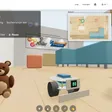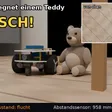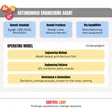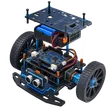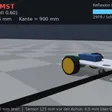

On a whim, I set out to develop an autonomous engineering agent and gave it one task: Design me a DIY robot, from the requirements document through CAD and simulation to the firmware. Now, several chat sessions later, I have a finished design, a shopping list, and a firm determination to build the thing (here it is in the simulation). But how autonomous was my agent, really?
I could of course start spinning tall tales here. That AI has arrived and engineers are no longer needed. And yes: they need to brace themselves (we do). At the very least, they should urgently get to grips with agentic frameworks and the APIs of their CAD and PLM environments. Because those are the gateway to much of what will change engineering in the future.
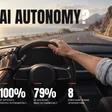
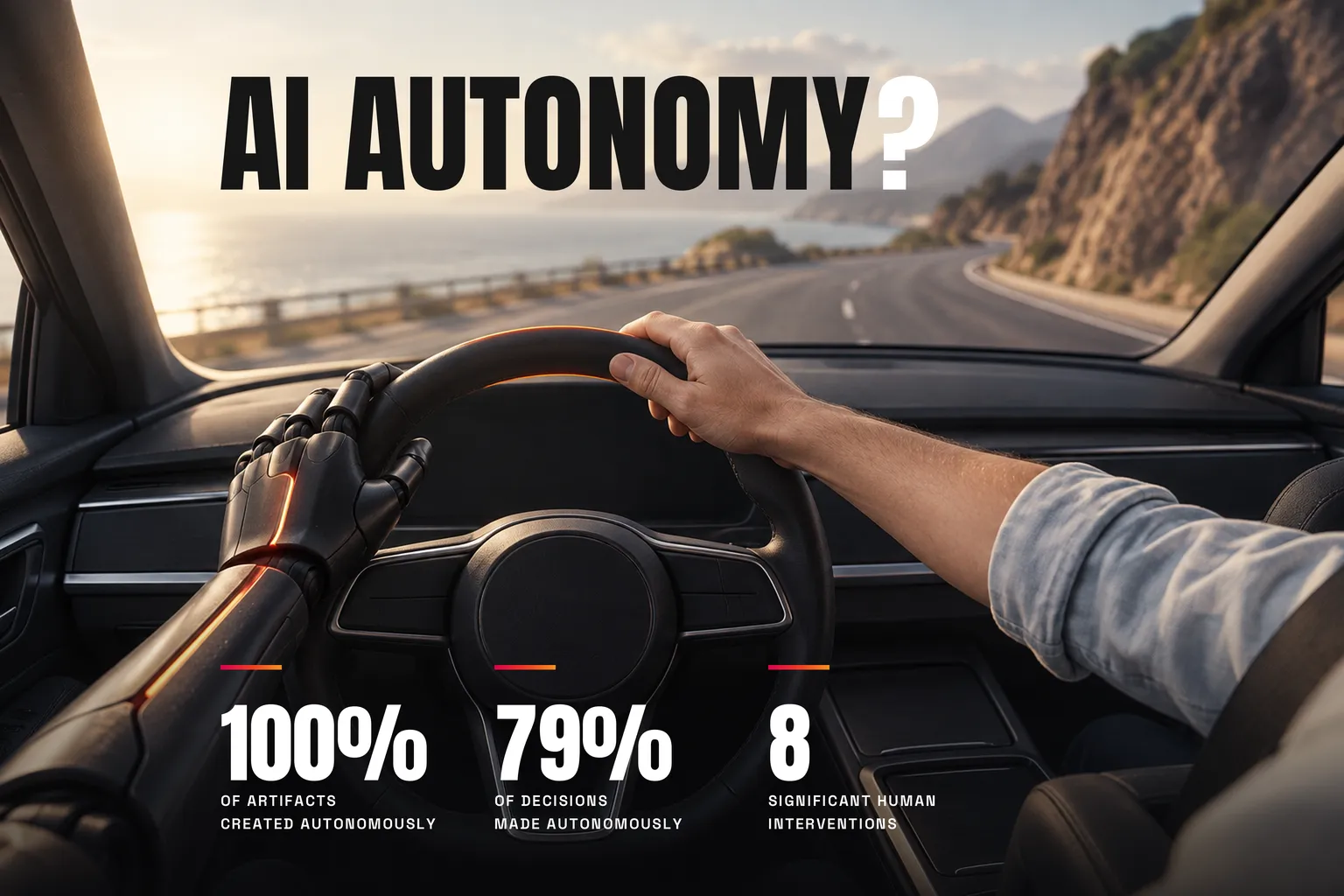
But no: my agent did not work fully autonomously. I tried to put that into numbers:
I feel like I’m repeating myself when I say: Without AI, this project would not have existed — but without me, it wouldn’t have either. But that sums it up pretty well. Over the course of the experiment, I saw how much potential AI already has, but also where its limits still lie. And for now, I’d like to raise two perspectives:
Two perspectives: model and harness
The limit of the model. AI has nearly unlimited world knowledge. But it sometimes struggles to draw the right conclusions at the right moment. This is a systemic limit that can only be overcome to a certain extent by future model generations,… but:
The compensation through the harness. The capabilities of the frameworks (“harnesses”) around AI models can make up for some of the blind spots of today’s models.
That’s why, with my experiment, I’m still far from reaching the limit of what’s possible, even with current models. I believe many of the weaknesses I saw can be compensated for with improvements to my operating model. For now, the robot will first be physically built in its current design draft, but right after that I plan to tackle the next iteration of my operating model.
I also want to take the whole project to the next level. So far, the foundation of my agent is the coding agent Claude Code. It’s already pretty good, but it actually comes from a different background. And as luck would have it, PROSTEP has its own agentic framework tailored precisely to PLM applications. It would be a shame not to use it for the next round ;-)
The worst blunders
So it’s not just numbers: these were my agent’s biggest blunders, and what would probably have prevented them.
| Blunder | What might have caught it |
|---|---|
| Rectangular aluminum frame instead of a round acrylic chassis, even though the kit is actually unambiguous | Design guideline: check assumptions from research against the datasheet and image |
| Missing fastening for the front panels | Completeness check of all parts and connections |
| Incomplete assembly model | Completeness check of all parts and connections |
| Parts in the simulation not correctly aligned | Automated check of the raw data (position, bounding box) instead of looking at the screenshot |
| Nonsensical simplifications in the simulation | Design guideline: justify model assumptions and verify them against a hand calculation |